
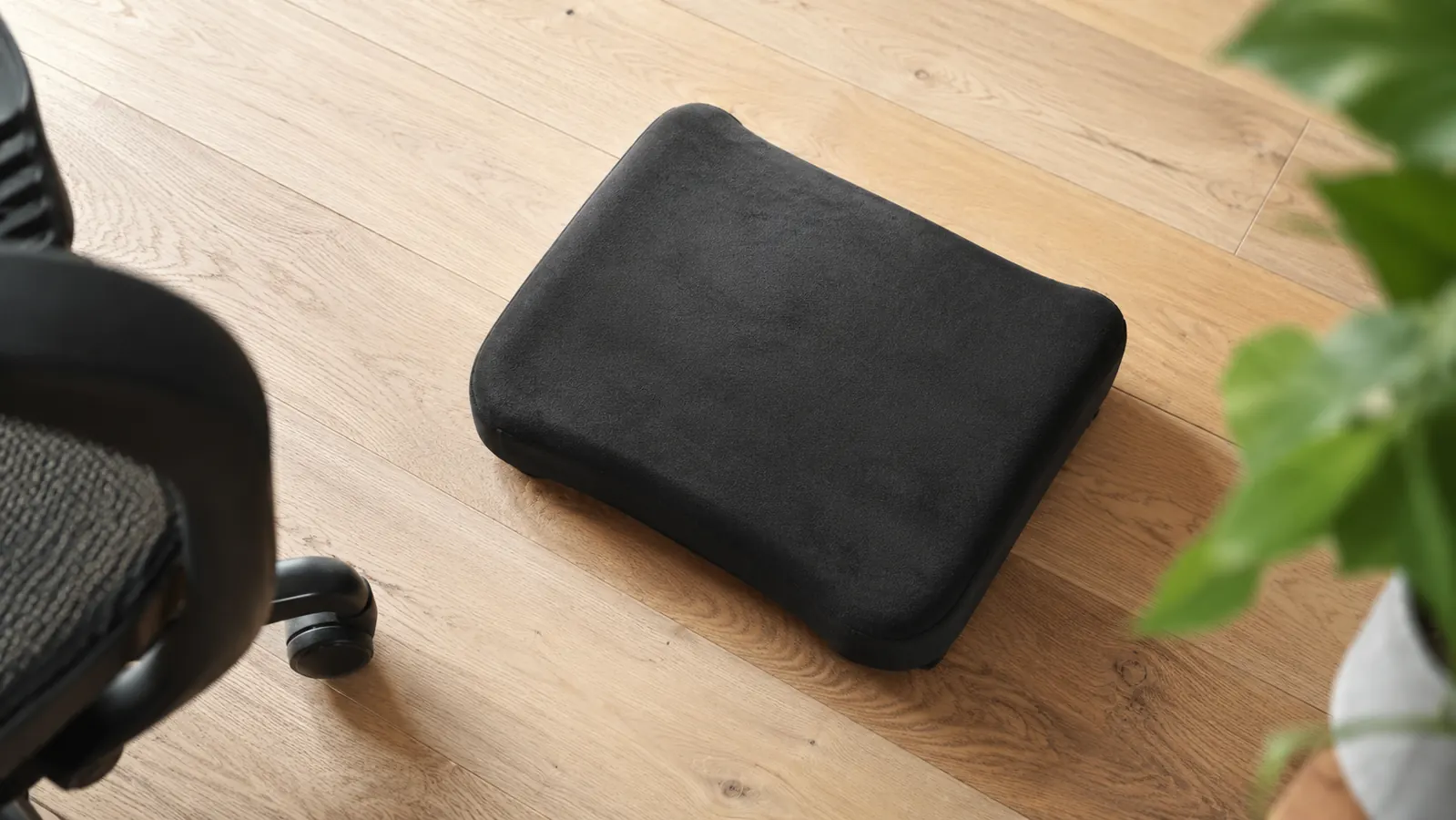
The Everlasting Comfort footrest has 28,000 reviews on Amazon. Most of them are five stars. Most of them were written in the first week of ownership. That is not a durability report, and it is not an honest accounting of what this product does and does not do well. I want to cover the things those reviews leave out, because a few of them are worth knowing before you click buy.
I have used this footrest daily at my home office desk. I have also fielded follow-up questions from readers who bought one based on my earlier review, and their notes filled in gaps I did not experience myself. Here is the version the listing page does not give you.
The Quick Verdict
A solid buy for standard office chairs and fixed-height desks, with real durability caveats around foam compression and a non-washable cover that the listing page undersells.
Amazon Check Today's Price →Still deciding? The foam does hold up, just not forever. Check current pricing before you overthink it.
The Everlasting Comfort footrest sits under 28,000 Amazon reviews for a reason. See today's price and availability before reading on.
Amazon Check Today's Price on Amazon →What the Listing Page Does Not Tell You
The first thing nobody mentions: it smells when it arrives. Memory foam off-gasses, and the Everlasting Comfort footrest arrives vacuum-packed in plastic, which concentrates the chemical smell. It is not dangerous. It is the same odor you get from a new foam mattress topper. But if you unbox it in a small home office and immediately put it under your desk, you will smell it for two or three days. The fix is simple: unbox it somewhere ventilated and let it air for 24 to 48 hours before putting it in your office. Almost no review mentions this, which means people either were not bothered or forgot to report it.
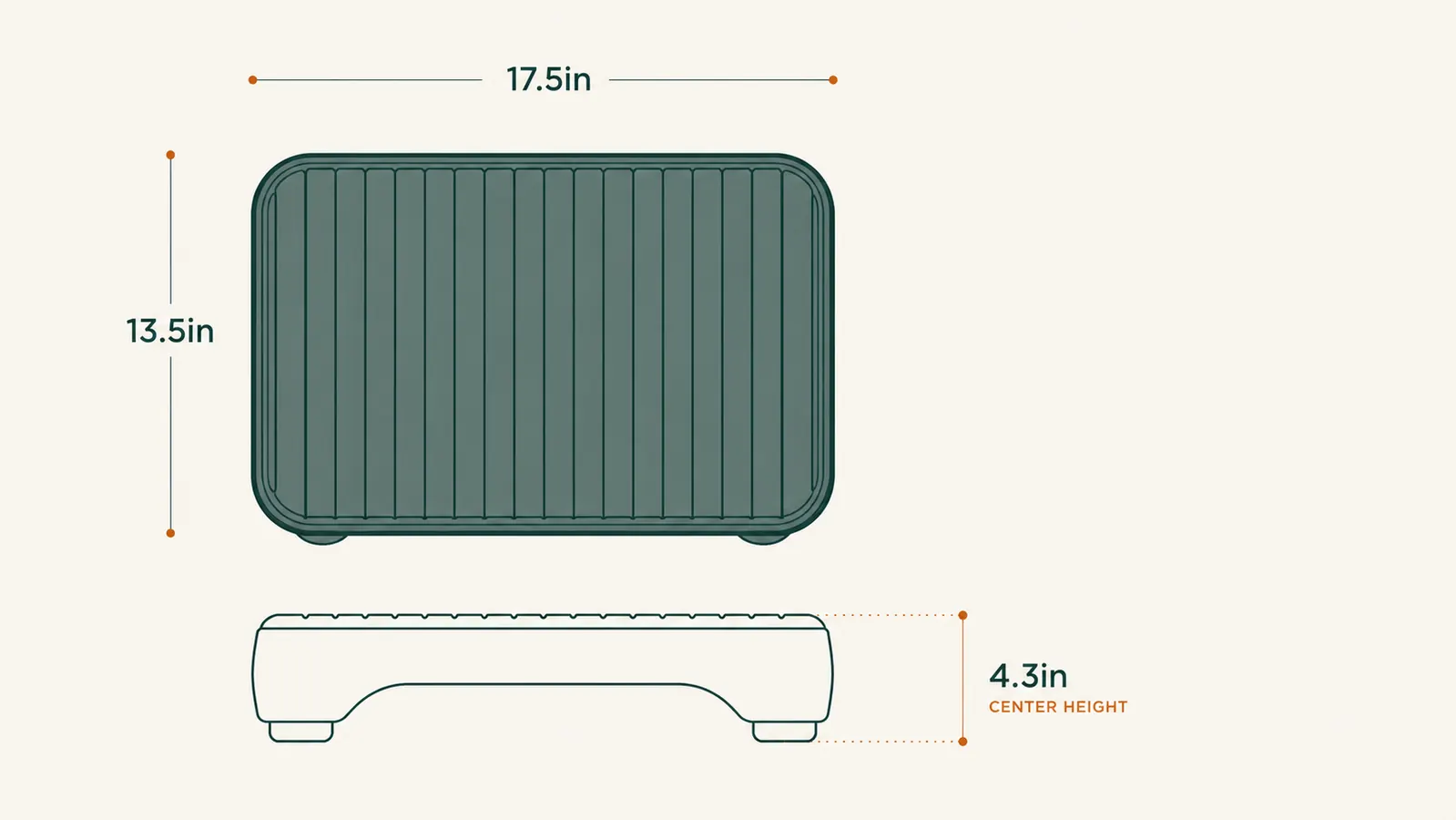
Second thing: the dimensions matter more than you expect. The footrest is roughly 17.5 inches wide and 13.5 inches deep. That sounds fine until you realize your desk apron or a privacy panel might cut into your usable under-desk floor space. Before buying, measure the clear floor depth from your desk's front edge back. If you have less than 15 inches of clear space, the footrest will push your chair back and change your reach distance in ways you may not like.
Third: the product weighs about 2.5 pounds. A light footrest slides when you kick it accidentally, which happens more than you expect during a long workday. The non-slip base grips well under deliberate foot pressure, but it does not resist a sideways bump. If your workday involves a lot of leg movement, crossing your legs, reaching to the side, or frequent chair shifts, expect the footrest to migrate from its ideal position and need periodic repositioning.
The Gaming Chair Problem
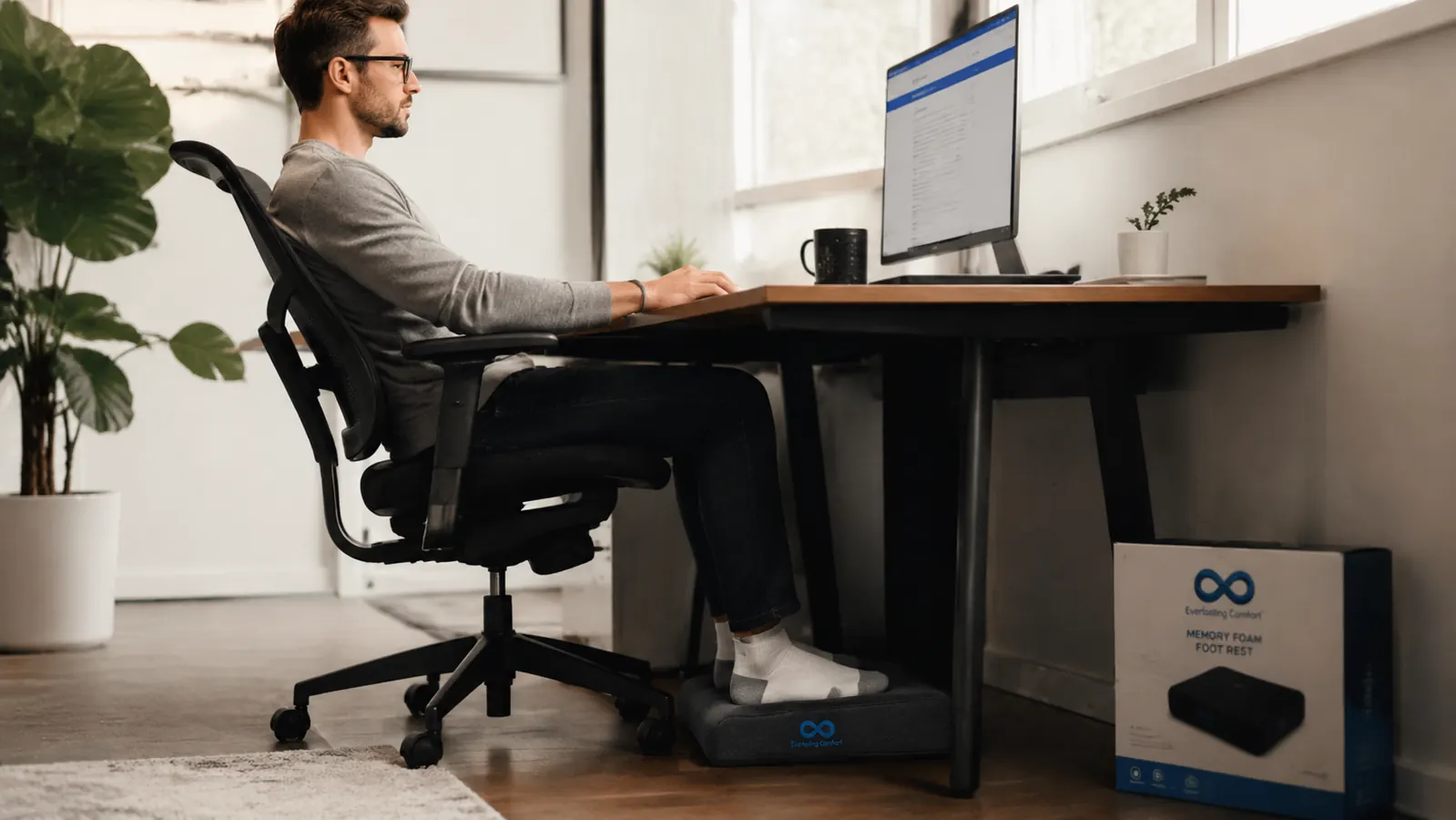
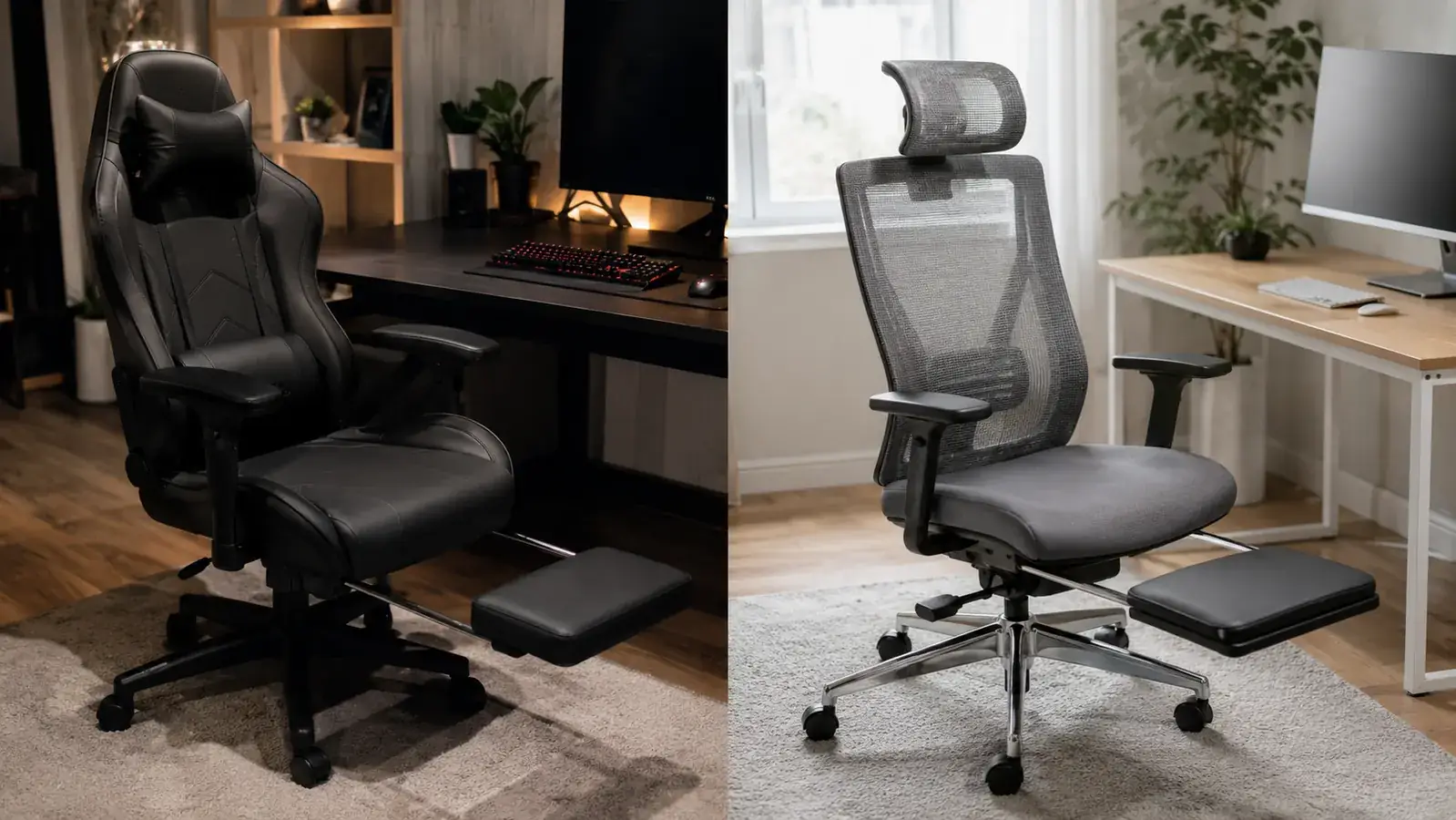
Here is something the listing does not address: this footrest does not work well with gaming chairs. Gaming chairs sit significantly higher than standard task chairs. The seat is elevated, the backrest reclines, and the overall geometry pushes you into a more reclined position with your legs at a sharper angle. When you add a footrest under a gaming chair, you often elevate feet that are already elevated, which tilts your pelvis further back and increases lower back strain rather than reducing it.
Several readers who bought based on my recommendation were using gaming chairs. Two returned the footrest. One said it made his lower back feel worse within an hour. This is not a product failure. It is a chair mismatch. The Everlasting Comfort footrest is designed for standard office chairs where your thighs are roughly parallel to the floor and your feet are just short of flat contact. If you have a gaming chair, a kneeling chair, or a saddle seat, do not buy this without testing it first.
What the One-Star Reviews Are Actually Saying
I went through 50 one-star reviews to understand the pattern. The complaints cluster into four groups. First: tall people. Reviewers at 6 feet 2 inches or taller repeatedly say the footrest does not provide enough elevation. That is a size constraint, not a defect. Second: gaming chair users, which I covered above. Third: people who expected memory foam to stay soft indefinitely. The foam does compress with use, and reviewers who compared month-six feel to day-one feel are disappointed. Fourth: reviewers whose footrest arrived with a smell and had no warning about off-gassing. Had they known to air it out first, several of those one-star reviews would have been three stars.
Very few one-star reviews describe a product that physically broke. No stitching failures, no cracked base. The dissatisfaction is mostly mismatch: wrong user type, wrong chair, or wrong expectation about memory foam. Knowing that going in changes how you should weigh the rating.
Most of the one-star reviews are not about a broken product. They are about a mismatch: gaming chairs, tall users, or expecting memory foam to stay soft for years. Know which category you are in before you buy.
The Honest Case For and Against Memory Foam
Memory foam has a specific tradeoff that nobody explains upfront. The softness and contouring you get in the first few months are genuinely pleasant. Your feet sink slightly into the surface, pressure distributes, and it feels supportive. The problem is that the same properties that make memory foam feel good initially, its responsiveness and compressibility, mean it changes over time. Foam cells deform under repeated load and do not fully recover. This is not unique to Everlasting Comfort. Any memory foam footrest follows this curve.
The alternative is a hard platform. Adjustable-height footrests typically use rigid plastic with a textured surface. That surface does not compress or change. The trade-off is comfort under bare feet. Hard plastic is fine with shoes on. It is less pleasant during an eight-hour barefoot workday. If you work in shoes, a rigid platform is worth considering because it will not degrade the way memory foam does. If you work barefoot or in socks, the memory foam surface wins on daily comfort even knowing it will settle.
There is also the DIY test worth acknowledging: a folded moving blanket provides some elevation and some pressure distribution at zero cost. It slides more, looks worse, and lacks a defined surface shape, but if you want to know whether foot elevation helps you before spending anything, two weeks on a blanket is a legitimate proof of concept. If the blanket helps, buy the footrest.
Cover Appearance After Real Use
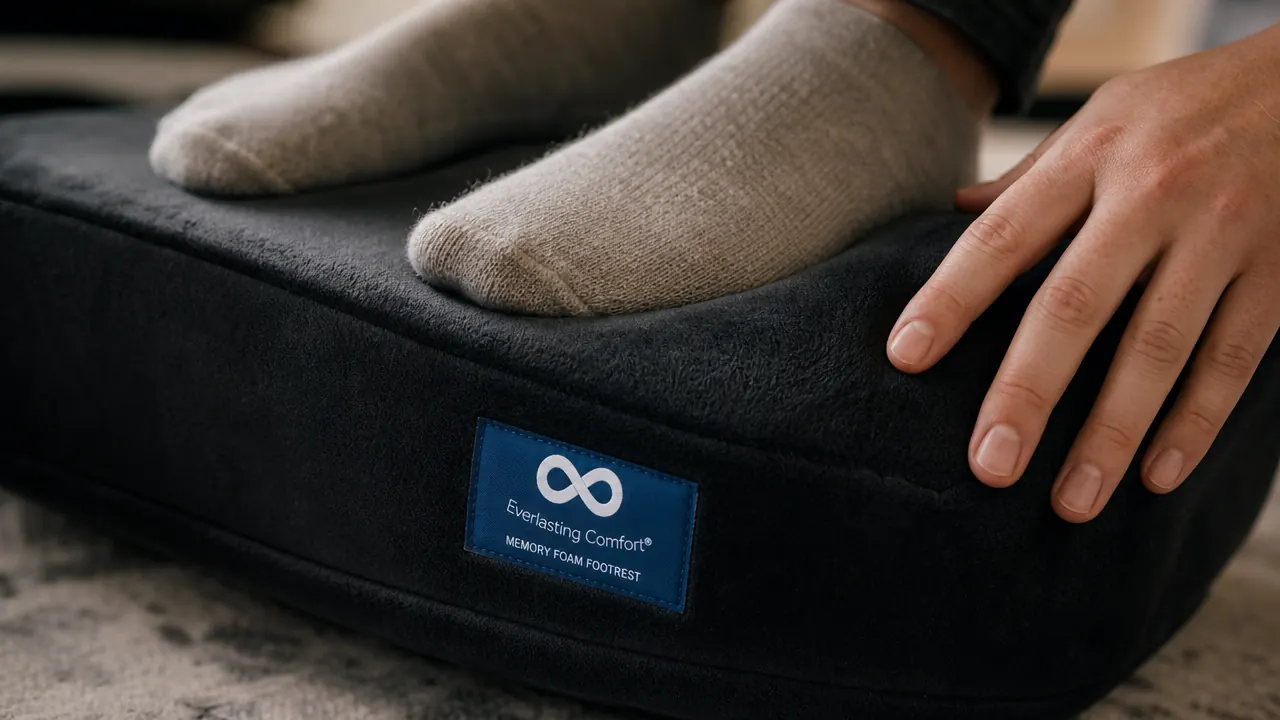
The dark charcoal cover photographs well in the listing. What you do not see is how it looks after a year of contact. The velvet develops wear patterns where your feet rest most consistently. The nap compresses and flattens in those spots, which creates a visible texture difference between the worn center and the untouched edges. The footrest still works normally. It just looks used. If your desk has an open front and visitors can see under it, the worn texture may bother you. If you work alone, it is irrelevant.
The dark color is actually smart from a maintenance standpoint. Skin oils and foot residue would show much more on a lighter cover. Charcoal hides that well. The real upkeep challenge is lint, which is more visible on dark fabric. Weekly vacuuming with an upholstery attachment handles it, but it is a routine you need to build.
Is It Placebo or Does It Actually Help
This question is worth asking. Ergonomic accessories are vulnerable to placebo effects. You spend money on something, you notice it every time you sit down, and your brain interprets that attention as relief. So let me be specific about the mechanism.
What it actually does: it raises your feet so your thighs no longer hang slightly off the seat edge. When your feet fall short of flat floor contact, the weight of your lower legs pulls down on the back of your thighs all day. That sustained pull restricts blood flow and produces the familiar afternoon leg ache. The footrest eliminates that pull. That is not placebo. That is a mechanical change with a predictable physiological result.
What it probably does not do: fix lower back pain from poor lumbar support, reduce wrist fatigue, or correct posture issues originating at the hips. A footrest is a targeted solution for one specific problem. If your issue is thigh pressure from feet not reaching the floor, this will help. If your issue is something else, it will not. The long-term use review has more detail on who experiences the ergonomic benefit most clearly.
What I Liked
- Solves a real ergonomic problem: thigh pressure from feet not reaching the floor flat
- Physically durable, the structure and base hold up through extended daily use without cracking or splitting
- Dark cover hides skin oils and residue better than a lighter fabric would
- Low enough price that replacing it every two years is a reasonable maintenance cost
- Works immediately, no adjustment period or setup required
Where It Falls Short
- Off-gassing smell on arrival requires 24 to 48 hours of airing before comfortable office use
- Not suitable for gaming chairs or elevated seats, can worsen posture in those configurations
- Slides on smooth floors when bumped sideways, needs periodic repositioning during active workdays
- Velvet nap develops visible wear patterns in foot contact zones after extended use
- Insufficient elevation for users over 6 feet 2 inches tall
Who This Is For
Buy this if you use a standard mesh or fabric task chair at a fixed-height desk, you are between 5 feet 4 inches and 6 feet tall, and your feet do not rest completely flat when your keyboard is at a comfortable height. If you end workdays with aching calves, numb legs, or pressure behind the knees, this is the right fix to try first. If you work barefoot or in socks, the velvet surface is significantly more pleasant than plastic alternatives at this price.
It is also worth buying if you are new to footrests and want to test whether foot elevation helps before committing to a pricier adjustable platform. At current pricing, a return is low-stakes. The footrest comparison article walks through when you should step up to an adjustable platform instead.
Who Should Skip It
Skip this if you have a gaming chair, a kneeling chair, or any seat that positions your hips differently than a standard ergonomic task chair. The footrest geometry works against other configurations. Also skip it if you are over 6 feet 2 inches and need meaningful elevation. The foam height is modest brand new, and it only becomes shorter as it settles.
Skip it if your under-desk floor depth is limited by a privacy panel or low crossbar. And skip it if the non-washable cover matters to you personally. Some people need to launder anything that contacts their feet regularly, and this product does not allow for that. If none of these disqualifiers apply, the product does what it says at a price that makes the decision straightforward.
Leg fatigue by 3pm usually has one cause. This is the cheapest fix worth trying.
If the qualifying conditions fit you and none of the disqualifiers apply, the Everlasting Comfort footrest is worth the current price without much more deliberation. See what it is selling for today on Amazon.
Amazon Check Today's Price on Amazon →