

I added the VIVO desk converter to my home office setup on a Tuesday in late January. By Friday afternoon my feet were done. Not sore in the way a long walk leaves you sore. More like a dull, grinding pressure that started at my heels and worked its way up. I was standing on a hardwood floor in socks, and by three o'clock I was sitting back down because I had no other choice. The thing that fixed it was a KANGAROO anti-fatigue mat under my feet, and I want to walk you through exactly how that happened.
I had read all the right things about standing desks. Alternate sitting and standing. Take breaks every 45 minutes. Keep your monitor at eye level. Nobody mentioned the floor. Nobody said: hey, concrete and hardwood are not designed for humans to stand on for hours. You are going to need something between your feet and that surface, or the standing desk converter becomes a very expensive reminder of why you were sitting in the first place.
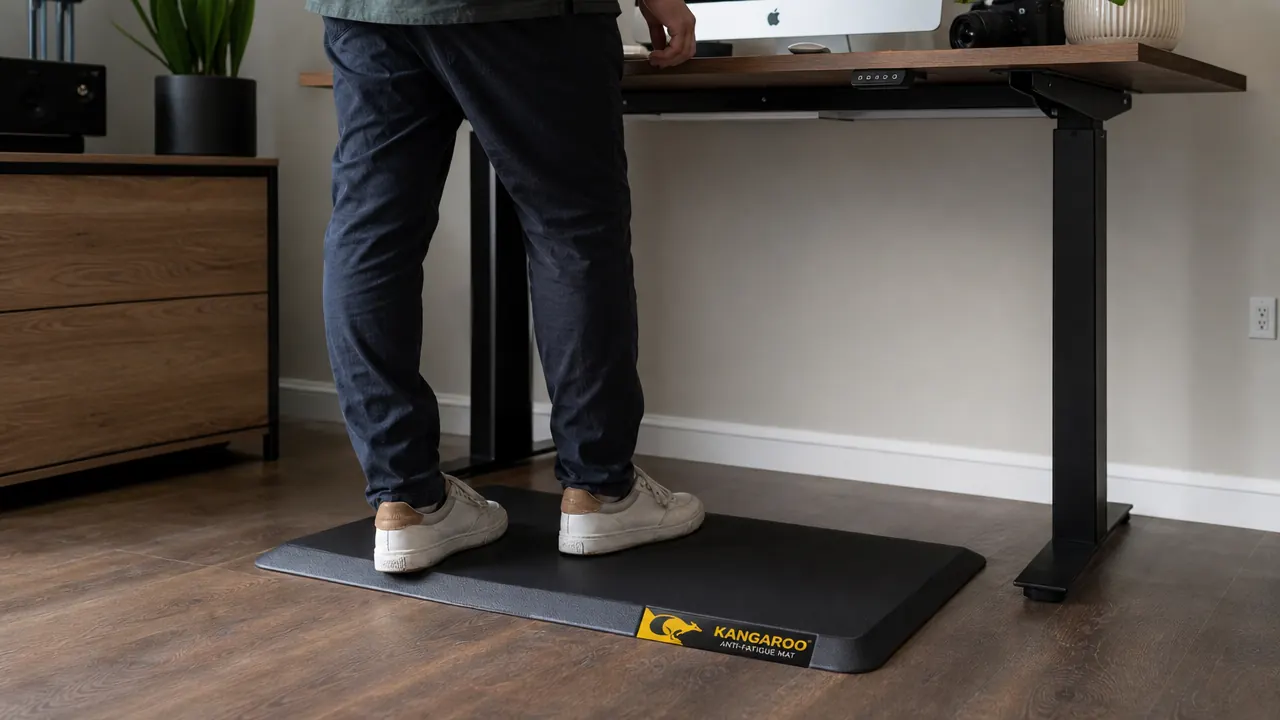
So after two weeks of doing it wrong, I ordered the KANGAROO Anti-Fatigue Mat. It is 3/4 inch thick, it has beveled edges so you are not tripping over it every time you step back, and it comes in a few sizes. I went with the 20 by 32 inch option, which fits squarely in front of a desk converter without spilling out into the rest of the room.
Standing on hardwood in socks for six hours is not a wellness upgrade. It is just a different kind of punishment. The mat changed that completely.
The first morning I used it I stood from 9 AM until noon with one short break. My feet felt nothing notable. That sounds like faint praise, but after two weeks of the grinding heel pressure, nothing notable was a revelation. The foam absorbs enough of the impact that your muscles are doing microwork to stay balanced, which is good, but the hard-floor fatigue that was killing me was gone.
I want to be clear about what this mat is and what it is not. It is a 3/4 inch slab of dense foam with a textured surface and beveled edges. It is not a luxury item. The surface is not soft underfoot the way a carpet is soft. It has a firmness to it that you can feel. That is by design. Anti-fatigue mats that are too soft create their own problems: your ankles have to work harder to stabilize on a squishy surface, which introduces a different kind of fatigue. The KANGAROO is firm enough to support you and compliant enough to stop the floor from winning.
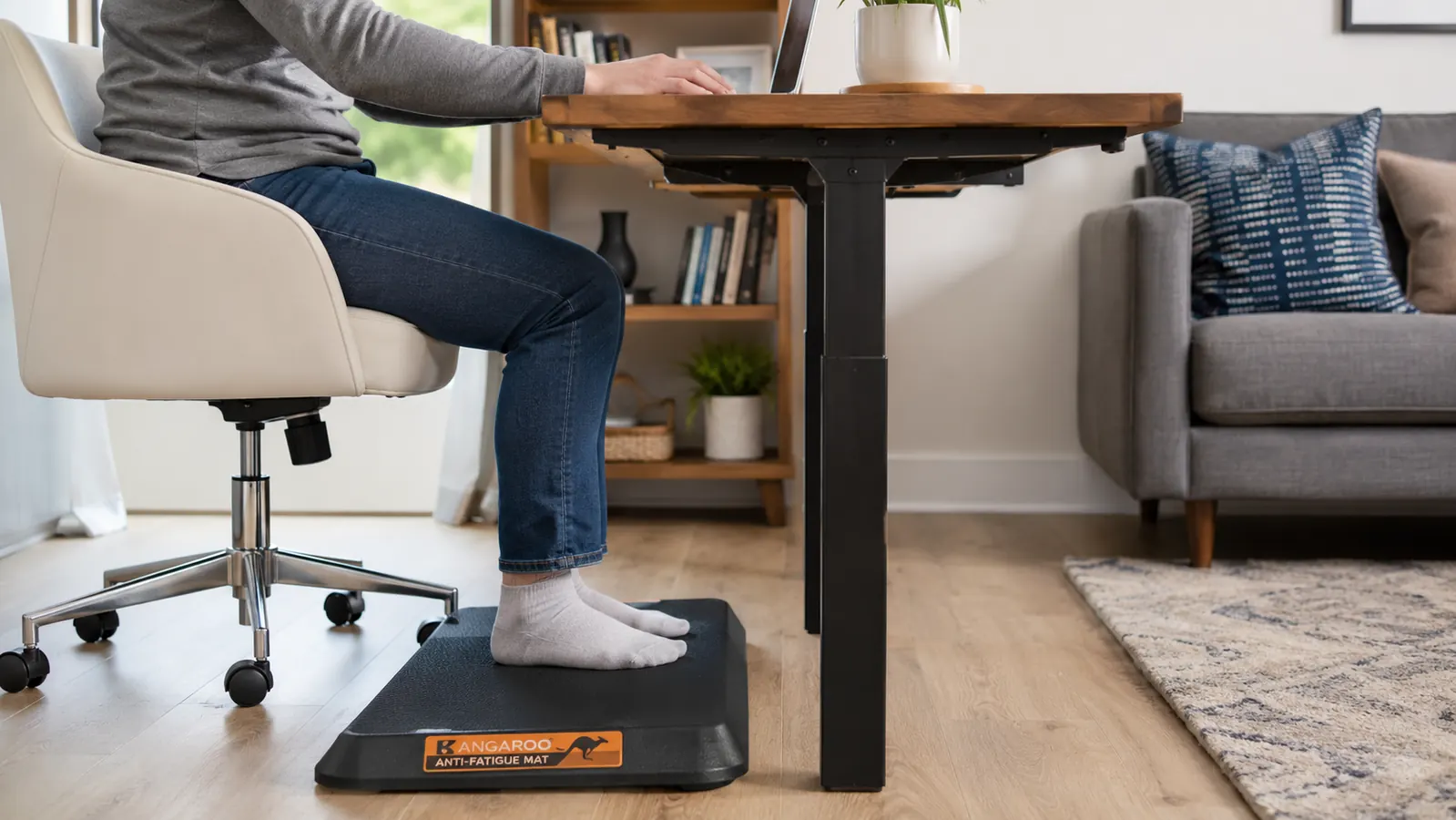
The beveled edges matter more than I expected. Before I had the mat, I kept a folded yoga mat in front of my desk as a temporary fix. I rolled my ankle stepping off it twice in one week. The KANGAROO has a gradual ramp at every edge. You walk onto it without thinking about it. That is exactly how it should work.
Your feet are the reason most people quit standing desks. This is the fix.
The KANGAROO Anti-Fatigue Mat, 3/4 inch thick, beveled edges, over 17,000 reviews on Amazon. Check current pricing before you spend another afternoon sitting down because your feet gave out.
Amazon Check Today's Price on Amazon -> →I have been using this mat for about ten months now. The foam has not visibly compressed. I do not feel like I am standing on a worn-out slab. Whether it holds up to year two I cannot say yet, but at the current trajectory I have no concerns. It wipes clean with a damp cloth, which matters if you work anywhere near food or coffee. The surface does not collect dog hair the way a fabric mat would. These are practical details that accumulate into a useful product.
The one thing I would have done differently: I would have ordered the mat the same day I ordered the desk converter. I wasted two weeks standing on hardwood and one ankle-rolling week standing on a folded yoga mat. That is a month of learning the hard way that the converter was never the whole solution.
What I'd Tell You If We Were Sitting at My Kitchen Table
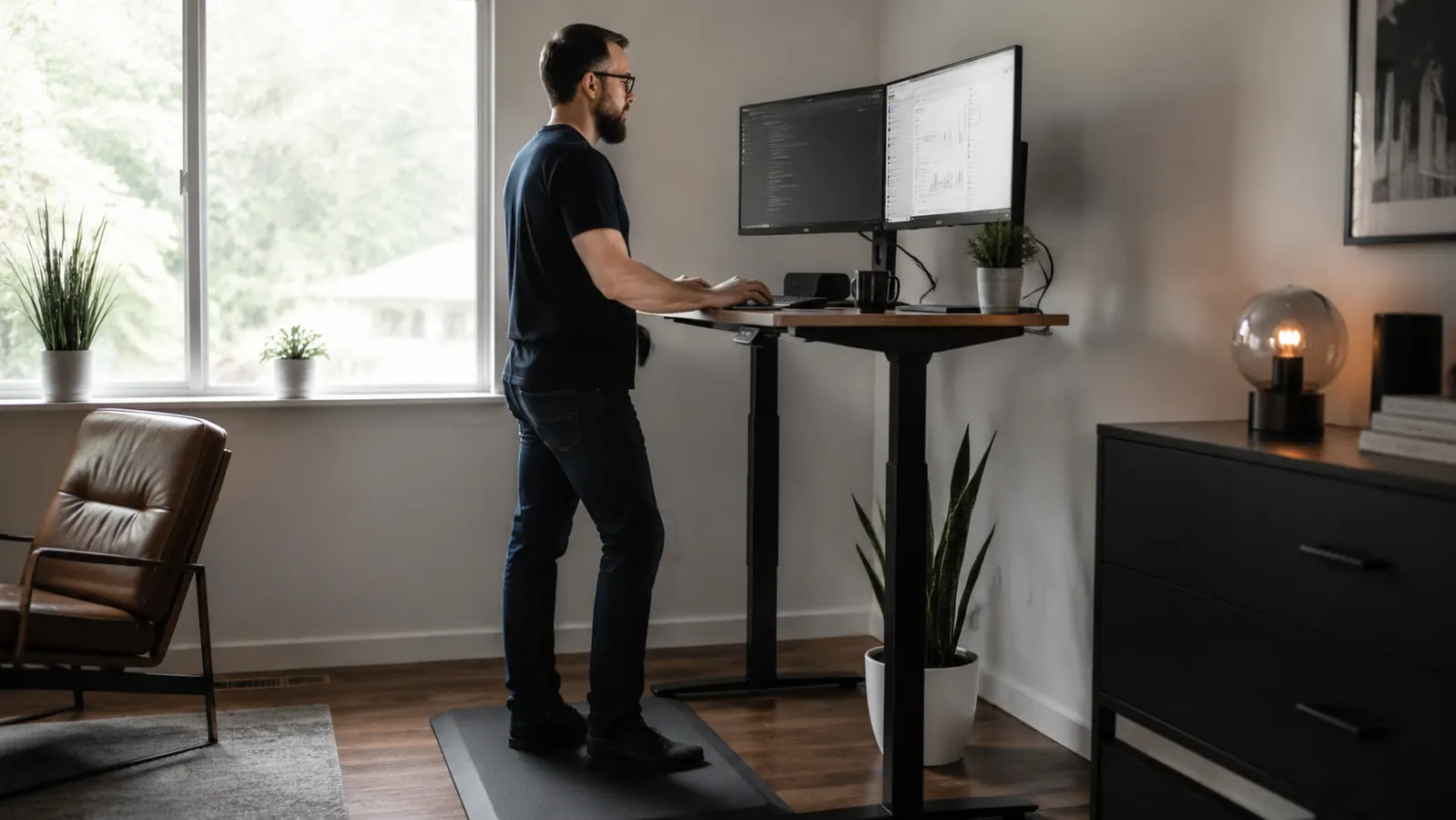
Here is the honest version, the kind I would give you over coffee. A standing desk converter is a real upgrade. It helped my lower back in ways that three years of sitting had quietly been undoing. But the converter addresses your back. It does nothing for your feet. You are still standing on the same hard floor you have always been standing on, just for longer stretches now.
If you already have a standing desk or converter and you are not using an anti-fatigue mat, that is the first thing to fix. Not a new chair. Not a monitor arm. The mat. It is the least expensive piece of the ergonomic puzzle and it has the most direct effect on whether you actually use the standing mode or keep sitting because it hurts. The KANGAROO is what I use and what I would buy again. It does exactly what it promises, it has not fallen apart, and it solved the problem I had.
If you want the full breakdown, I wrote a longer review covering the foam density, how it compares to the Topo Comfort Mat at three times the price, and what I noticed after a year of daily use. That is over at the KANGAROO anti-fatigue mat long-term review. And if you are still deciding between budget and premium, the KANGAROO vs Topo comparison breaks that down directly.
Ten months in, I would still buy this mat again on the same day.
The KANGAROO Anti-Fatigue Mat is the one thing I wish I had added to my standing desk setup from day one. Check the current price on Amazon and see what size fits your setup.
Amazon Check Today's Price on Amazon -> →