
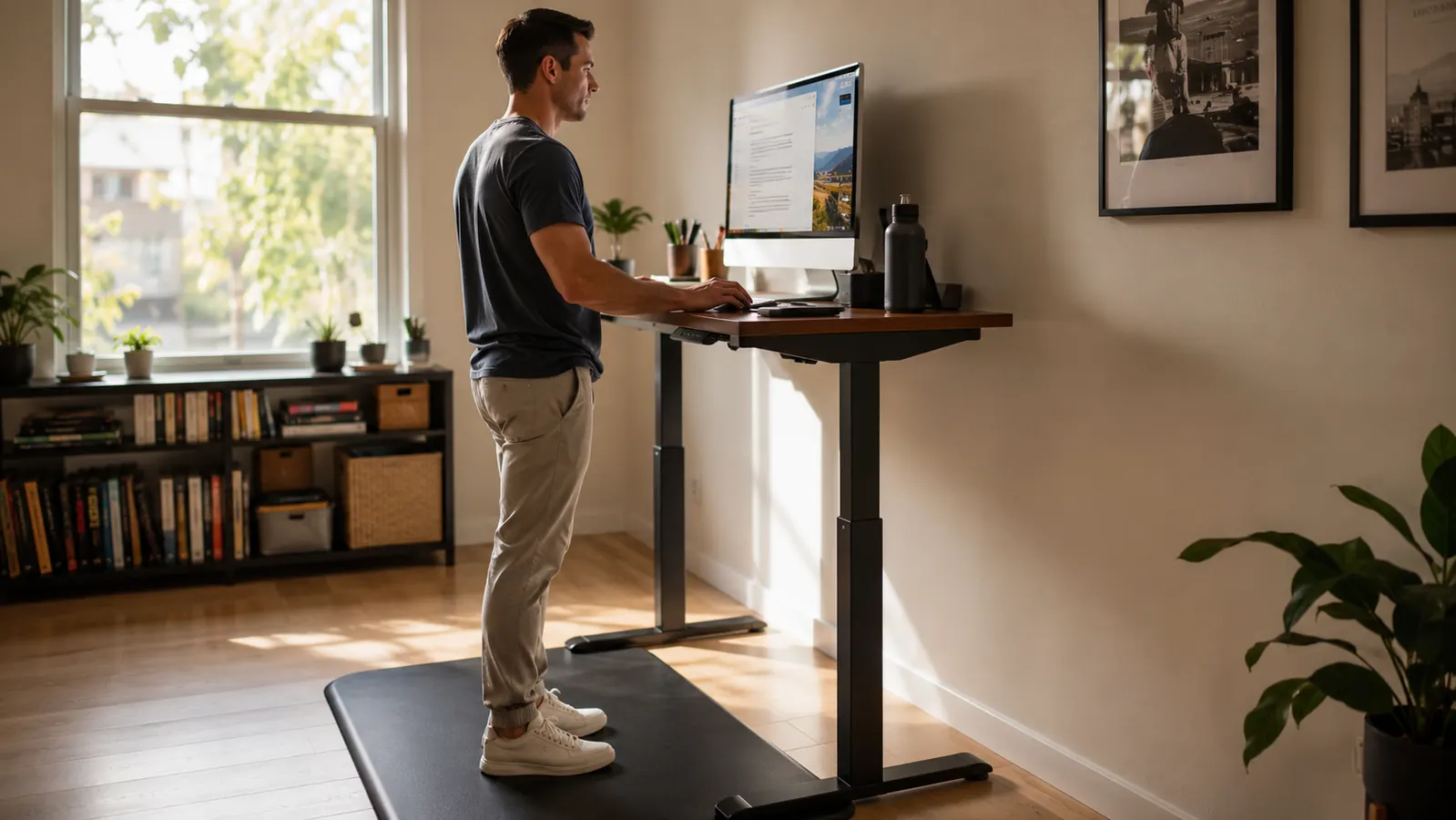
I added the KANGAROO anti-fatigue mat to my home office in June 2025, the same week I put a VIVO desk converter on my desk. I had been sitting all day for three years straight and my lower back had started sending me daily reminders that this was not sustainable. The desk converter solved the standing part. The mat was supposed to solve the "why do my feet feel like I ran five miles by 2 p.m." part. I weigh about 185 lbs, I stand in socked feet, and I was using the mat four to six hours on most workdays. That is the context for everything that follows.
One year in, I can tell you whether the foam held up, whether the beveled edges are as useful as the product page implies, and what I would do differently if I were buying a mat for the first time today. No sponsored nonsense, no affiliate cheerleading. Just what I actually noticed.
The Quick Verdict
Solid entry-level anti-fatigue mat that genuinely reduces foot and knee fatigue; the foam softened noticeably by month eight but has not gone flat, and the bevel edges do their job. Not a premium mat, but it earns its price.
Amazon Check Today's Price →If standing on hard floors is killing your feet, this is the mat most remote workers start with.
The KANGAROO mat is 3/4 inch thick, has beveled edges on all four sides, and runs at a budget-friendly price most days. It is not the most sophisticated anti-fatigue mat on the market, but it handles the basics well and it has been under my feet for a full year without dying.
Amazon Check Today's Price on Amazon →How I've Used It
My home office setup involves a 60-inch desk with a VIVO K-Series converter on top. When I raise the converter, I step onto the mat. When I lower it back to sitting height, I slide the mat to the side so it does not become a trip hazard. I do this transition about three to five times a day. The mat lives on a hardwood floor, not carpet. It is the 20-by-32-inch size, which gives me enough room to shift my weight around without stepping off the edge mid-afternoon.
I keep the mat in the same spot every day, so the wear pattern is concentrated in one area, roughly where I plant my feet when I am reading rather than typing. I tested it with socks and without socks. The surface gets slightly grimy over a month of use, which I will get to in the cleaning section. The mat never moved on the hardwood floor during normal use, which I was skeptical about before buying.
My main comparison point is the bare hardwood floor I stood on for the first three weeks after adding the converter, when I told myself the mat was an unnecessary extra purchase. Those three weeks were enough to convince me I was wrong. Foot soreness by midday was significant. Once I added the mat it went away almost immediately. That is not a dramatic marketing claim; it is just what happened.
Foam Density and Compression: The Real Long-Term Question
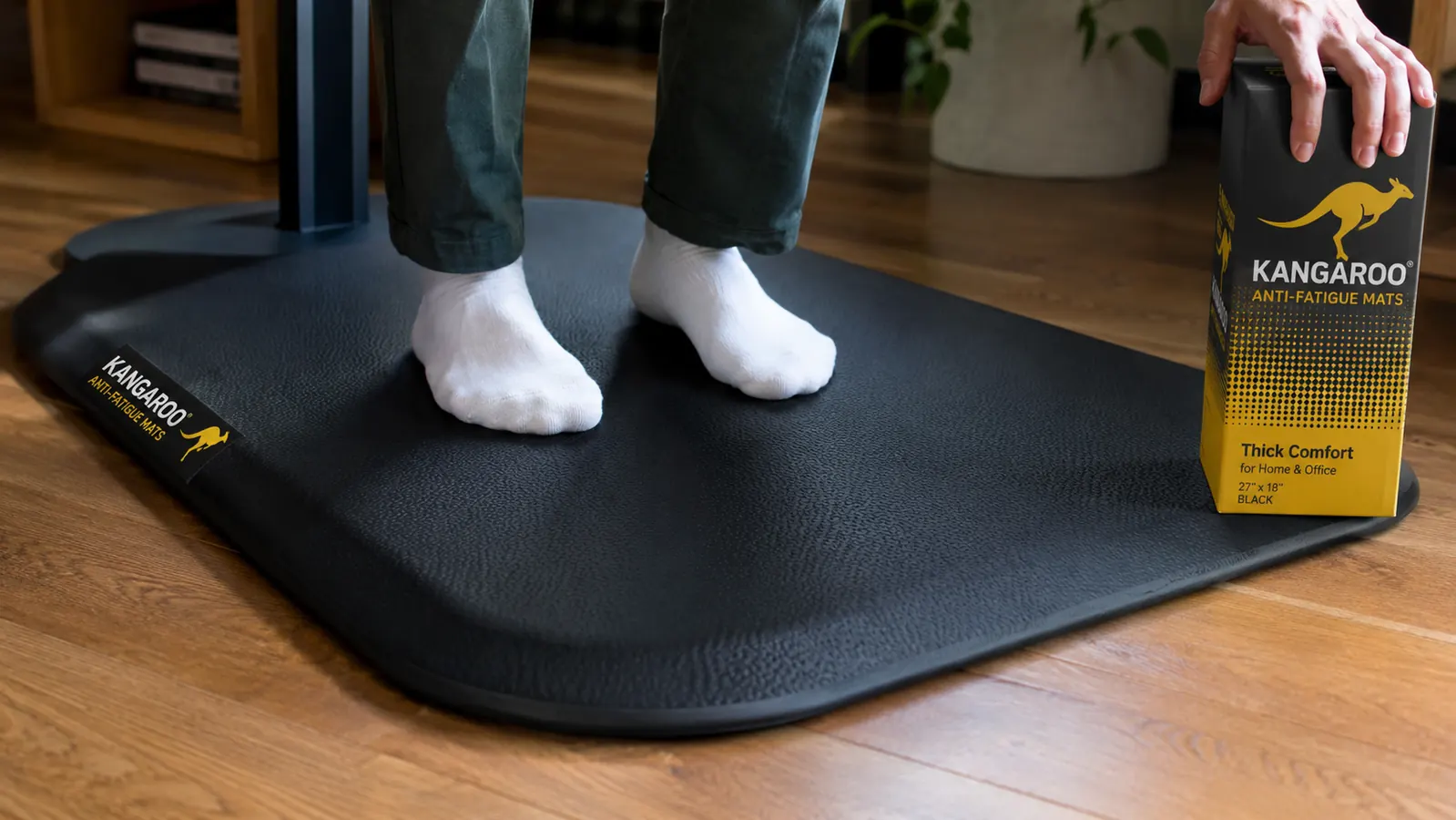
The KANGAROO mat is 3/4 inch thick and made from PVC foam. When it arrived it had a slight chemical smell that faded within 48 hours. The foam felt firm when I pressed on it with my hand, but noticeably softer than the floor when I stood on it. That initial firmness is important because cheaper mats start too soft and compress to almost nothing within a few months.
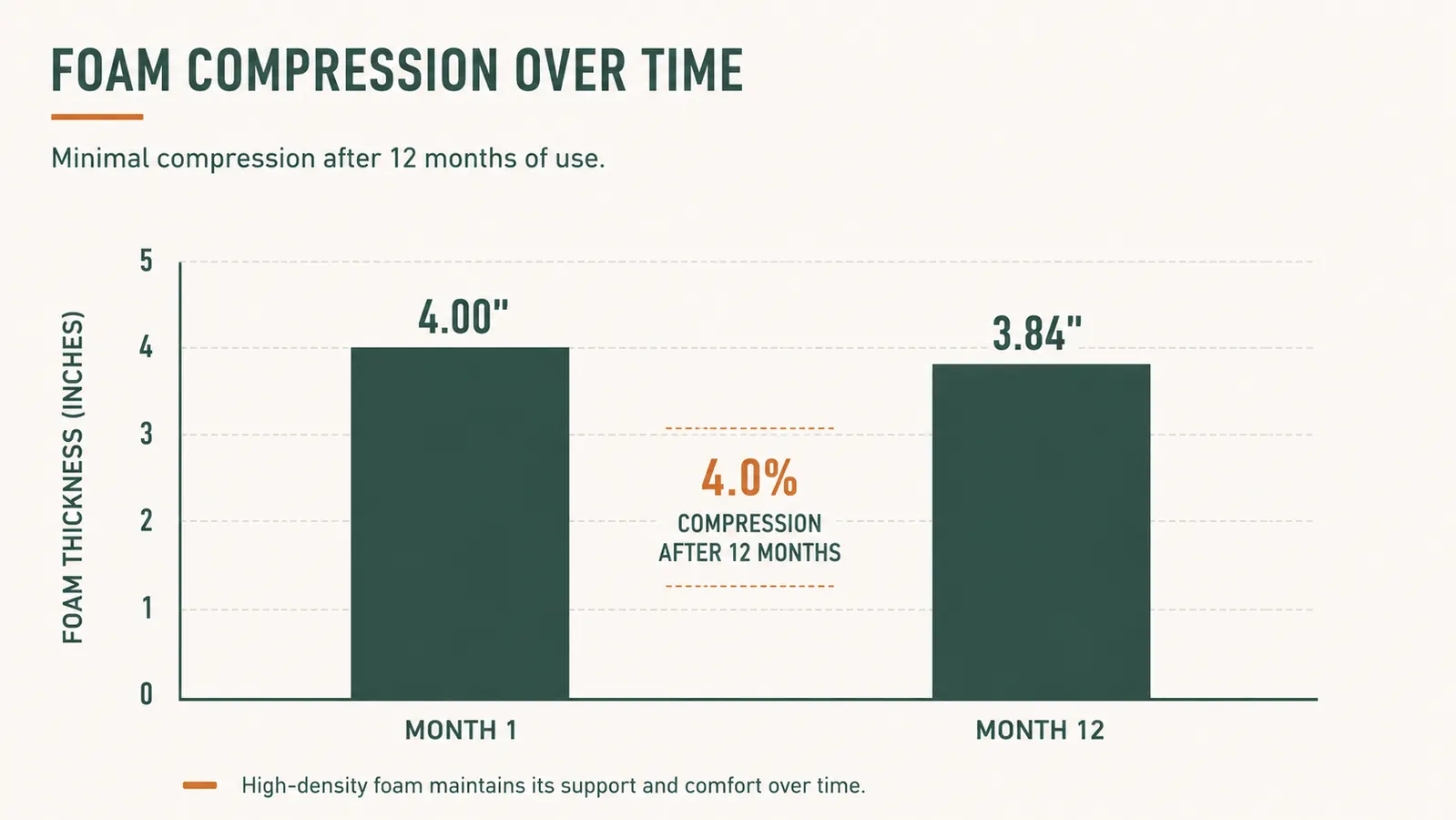
By month three, I could not detect any meaningful compression. By month six, the primary standing zone was slightly softer than the perimeter when I knelt down and pressed on it with my hand. By month eight, that difference was real enough that I started paying attention. The mat did not go flat. It still provided noticeable cushion compared to the floor. But the foam had relaxed from its original density in the center. The outer edges, where I rarely stand, still feel close to new.
At the twelve-month mark, the central zone is softer than it was on day one but still functional. If I had to put a number on it, I would estimate about 20 to 25 percent compression in the main standing area. The mat is still doing its job. I would not call it fresh, but I would also not replace it yet. If I had been standing eight or more hours a day rather than four to six, I expect the timeline would be shorter.
The foam did not go flat. It relaxed over time in the center, and it still cushions better than standing on hardwood. That is an honest one-year verdict, not a sales pitch.
The Beveled Edges: More Useful Than I Expected
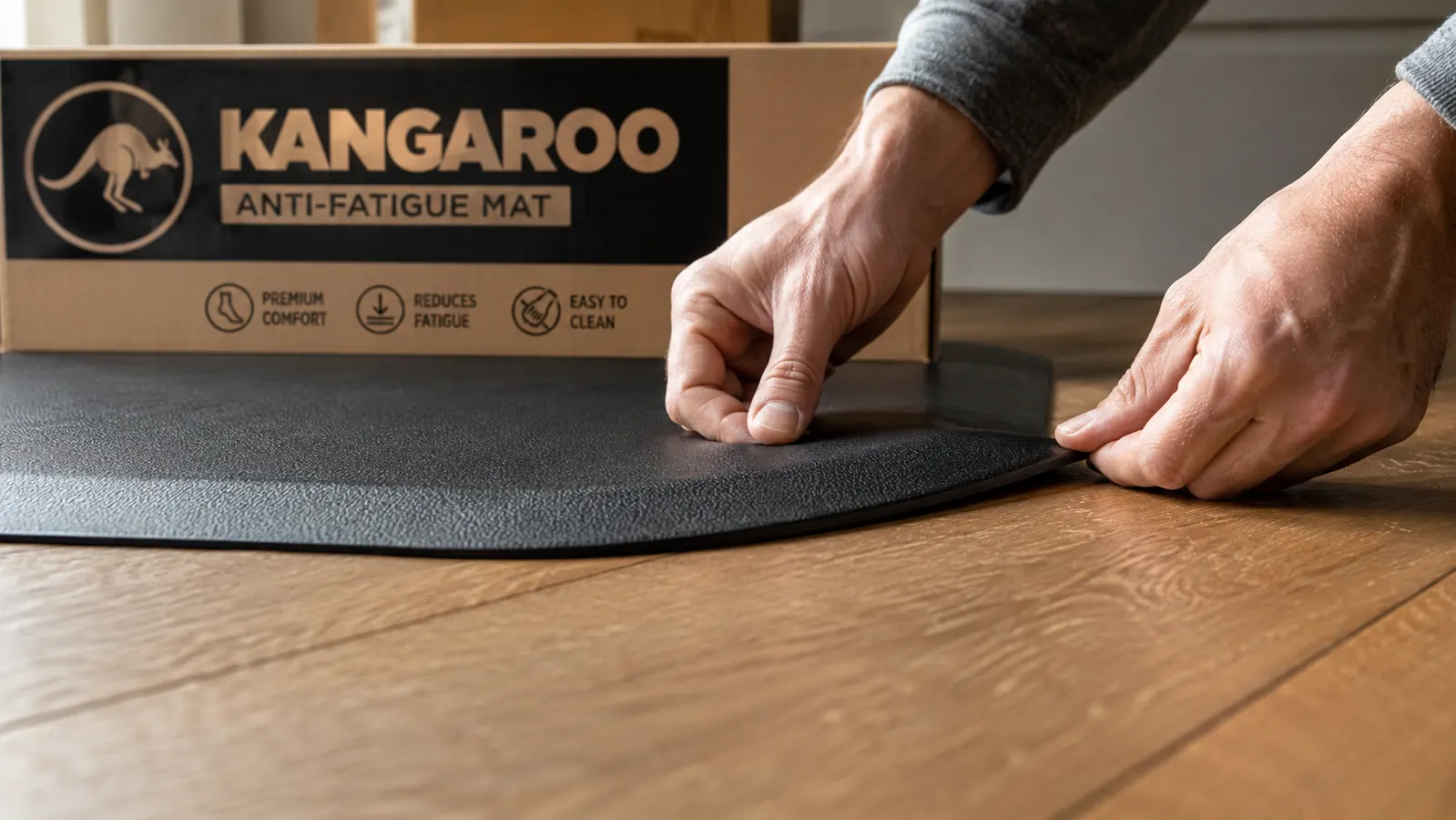
Anti-fatigue mats have two common failure modes when it comes to edges. The first is a sharp vertical edge that you stub your toe on when you step off in the dark. The second is an edge that looks beveled on the product page but in practice is steep enough that it still creates a tripping hazard. The KANGAROO edges are genuinely gradual. I step on and off this mat dozens of times a day without thinking about it. I have never tripped over it, and I am not particularly careful.
The bevel also matters for the mat's grip on the floor. Because the edge tapers rather than ending vertically, the mat does not lever up off the floor when you step near the edge. It stays flat. On carpet, this might not be an issue, but on my hardwood floor it was something I noticed positively. The underside has a slightly textured surface that grips without any adhesive. In twelve months it shifted maybe an inch out of position once, and that was when I kicked it accidentally.
Cleaning and Surface Durability
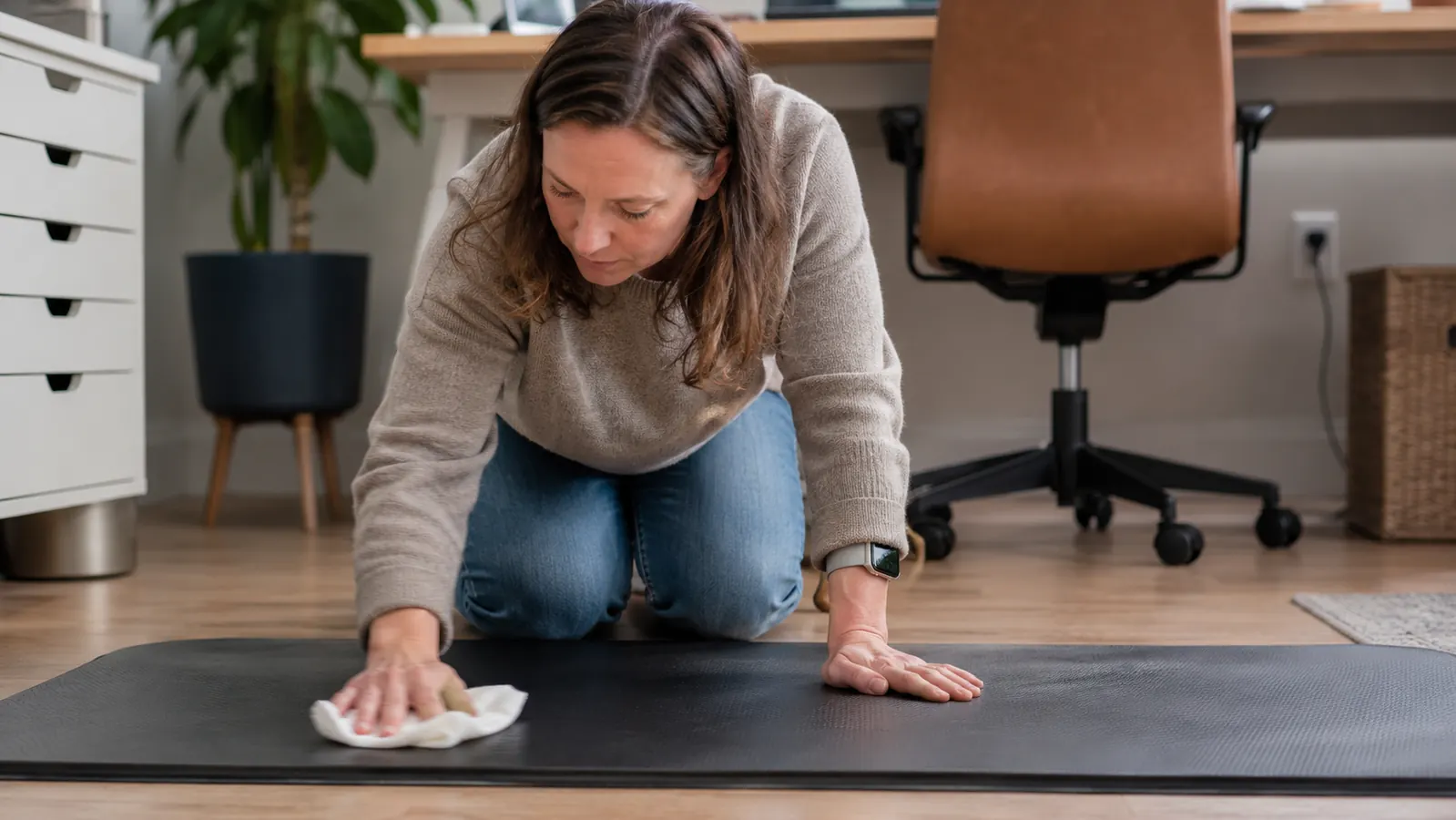
The surface is a smooth PVC texture. Dust and lint collect on it quickly, especially in a home office where the floor does not get swept every day. A damp cloth wipes it clean in under a minute. I cleaned it roughly once a month. It did not absorb spills because I spilled a small amount of coffee on it in month four and it wiped off without staining.
The top surface has not shown any significant cracking or surface degradation at the twelve-month mark. I have seen cheaper foam mats develop small cracks along the edges where the foam bends repeatedly, usually starting around the six-month mark. The KANGAROO mat has no visible cracking at the edges or surface. The color is uniformly black throughout. The underside texture is still intact. These are minor points, but they matter for durability.
Size Options and What I Would Choose Again
The KANGAROO mat comes in multiple sizes. I have the 20-by-32-inch version, which is the most common size for a single-person standing desk setup. It is wide enough that I can shift from a narrow stance to a slightly wider stance without stepping off. It is not wide enough for someone who paces or shifts dramatically side to side while standing. If you move a lot while standing, the 20-by-39-inch version is worth considering.
The mat I have does not extend far enough in front of me to accommodate a forward lean against the desk. If I lean into the desk with my hips forward, my heels are near the back edge of the mat. That is a positioning issue as much as a size issue. I adjusted my standing posture rather than buying a larger mat. But if your natural stance puts your center of gravity forward, size up.
What Changed in My Body After 12 Months
This is the section that matters most and the one I see skipped in most reviews. I added the standing desk converter and the mat together, so I cannot perfectly isolate which one did what. What I can say is that foot fatigue dropped dramatically compared to the first three weeks of standing without the mat. By month two, I had stopped thinking about my feet during standing periods. Lower back discomfort went away after about six weeks of consistent standing, which I attribute mostly to the posture change but the mat contributed by making standing tolerable long enough to build that habit.
Knee discomfort, which I had not expected to be a factor, also improved. Standing on hard floors repeatedly puts stress on your knees in a subtle way that builds up over days. With the mat, that pressure has somewhere to go. I noticed this most clearly on days when I accidentally stood on the uncarpeted laundry room floor for extended periods. The difference was immediate and obvious.
What I Liked
- Genuine foam cushion that reduces foot and knee fatigue noticeably versus standing on hardwood
- Beveled edges on all four sides are gradual enough that stepping on and off is completely natural
- Does not slip on hardwood floors during normal use
- Wipes clean easily, no staining from minor spills
- Reasonably priced most days, fair price for what it delivers
- No cracking or surface degradation after 12 months of daily use
Where It Falls Short
- Foam compression in the primary standing zone is noticeable by month eight; not dead but not factory-fresh
- Surface collects dust and lint quickly on hardwood floors
- Slight chemical smell on arrival that takes 24 to 48 hours to dissipate
- Not large enough for anyone who shifts or paces significantly while standing
- Rating of 4.4 stars reflects real durability concerns from heavy daily users
How It Compares to the Topo Comfort Mat
The Topo Comfort Mat by Ergodriven is the mat you will see recommended in most premium home office roundups. It has a terrain design with raised sections that are supposed to encourage micro-movements while you stand. It also costs roughly four to five times what the KANGAROO costs. I have not used the Topo for a full year, but I have stood on one for a few hours during a visit to a friend's home office. The terrain design is genuinely useful if you have the habit of shifting your weight and engaging different positions while standing. If you plant your feet and stand still while you type, which is what I do most of the time, the flat surface of the KANGAROO is perfectly adequate. The full comparison lives in a separate article if you want to read through the details on that decision.
For a first-time standing mat buyer, I consistently point people toward the KANGAROO rather than the Topo unless they are already experienced standing desk users who know they engage actively with the mat surface. The KANGAROO price means you can try the habit, confirm you will actually use a standing desk regularly, and then upgrade if you want something sophisticated. Buying a premium mat before you know whether you will use the standing mode consistently is a bet I would not take.
Who This Is For
The KANGAROO anti-fatigue mat is the right choice for a remote worker who has just added a standing desk converter and needs a mat that will do its job without requiring a significant second purchase. It is also right for anyone who has been standing on a hard floor and wants to fix that problem without overthinking the upgrade. If you stand four to six hours a day and your primary concern is foot and knee fatigue relief rather than active movement encouragement, this mat handles that job solidly for at least a year.
Who Should Skip It
If you stand eight or more hours a day at a full-time standing desk, the foam compression timeline will be shorter than what I described. A mat designed for commercial or heavy-use environments, something with a higher-density foam core, would hold up better under that load. If you already know you want a terrain-style mat with raised zones and you are willing to pay for it, skip the KANGAROO and go straight to the Topo or a comparable premium option. And if you work in socked feet on carpet rather than hardwood, you may not need a dedicated anti-fatigue mat at all. Carpet already provides some cushion.
Your feet will tell you the difference from day one. The KANGAROO mat is where most standing desk setups start.
After a year of daily use, the KANGAROO anti-fatigue mat still cushions better than standing directly on hardwood. The foam has softened in the center, but it has not gone flat. At the current price, it is one of the best-value ergonomic upgrades in a home office standing setup.
Amazon Check Today's Price on Amazon →